Source customized logo flat toploader for cards, comics, and games
Find 30 listings for customized logo flat toploader designed to protect and display sports cards, game cards, and collectibles. Buyers can compare sizes, thicknesses, and customization options from verified suppliers in China.
Key considerations
Products List








Comprehensive Sourcing Guide
Strategic Sourcing Guide for Customized Logo Flat Toploader Products
Procuring customized logo flat toploader products requires a disciplined approach that balances aesthetic customization with structural integrity and regulatory compliance. In the B2B marketplace, these items serve as critical protective and display solutions for collectibles, ranging from sports cards to gaming memorabilia. The following guide synthesizes observed market data and technical attributes to assist procurement professionals in evaluating suppliers and defining precise product requirements. Buyers must navigate a landscape where material properties, such as PVC composition, and manufacturing methods, including blow molding, directly influence the final utility of the product.
Technical Specifications and Material Composition
The foundational aspect of sourcing flat toploaders lies in understanding the specific material and dimensional specifications that define product performance. Based on available market data, the primary material identified for these protective sleeves is PVC (Polyvinyl Chloride). This material choice is significant because it offers a balance of rigidity and flexibility, essential for protecting delicate items without causing damage through excessive pressure. The transparency of the product is a key attribute, ensuring that the visual appeal of the card or item inside remains unobstructed.
Dimensional consistency is paramount. The observed specifications indicate a standard size of 3x4 inches, which aligns with common trading card formats. However, the market also supports customized sizing, allowing buyers to tailor products for non-standard items. Thickness is another critical variable. The data reveals a wide range of standard thicknesses, including 35pt, 39pt, 55pt, 75pt, 100pt, 130pt, 180pt, 260pt, and 360pt. The "pt" designation refers to points, a unit of measurement for paper and plastic thickness. A 35pt or 39pt thickness is generally considered standard for basic protection, while higher values like 100pt or 180pt offer superior rigidity for high-value collectibles.
The manufacturing process observed in the supply chain is blow molding. This method is particularly relevant for creating the specific structural form of the toploader, ensuring uniform wall thickness and consistent transparency. The hardness of the product is noted as "soft" in some contexts, which may refer to the tactile feel or the flexibility of the material edge, though the primary function remains rigid protection. Buyers should verify the exact hardness rating required for their specific application, as a product that is too soft may fail to protect, while one that is too hard might be difficult to insert cards into.
Customization Capabilities and Branding Integration
One of the primary drivers for sourcing these products is the ability to apply a customized logo. The supply chain data confirms that customization is available, with specific mentions of "Customized" and "OEM/ODM" capabilities. This allows brands to integrate their identity directly onto the protective sleeve, turning a generic utility item into a branded asset. The preferred method for applying these logos is silk screen printing. This technique is well-suited for plastic surfaces and allows for durable, high-contrast branding.
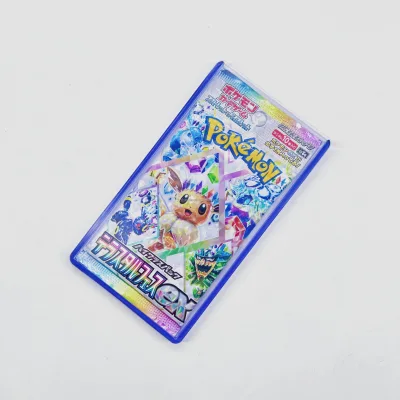
When evaluating customization options, buyers must consider the packaging implications. The data indicates that products are often packed in color boxes, with specific configurations such as 10 pieces per pack or 25 pieces per pack. Some listings suggest bulk packaging of 20 packs per carton. The "Customized" attribute extends beyond the logo to include the size and potentially the color border. The observed product name "3X4" Display Toploader Color Border" suggests that the border color can be a differentiating factor. Procurement teams should request samples to verify the color accuracy and the adhesion quality of the silk screen printing, ensuring that the logo does not peel or fade over time.
The "Fashion" style attribute observed in the market suggests that these products are not merely utilitarian but are also designed with aesthetic appeal in mind. This is particularly relevant for high-end collectibles where the presentation is as important as the protection. Buyers should inquire about the availability of different border colors and finishes to match their brand identity or the specific theme of the collectibles they are protecting.
Compliance, Certification, and Regulatory Standards
Navigating the regulatory landscape is a critical component of B2B procurement, especially for products that may be sold globally. The observed market data lists several certifications, including CE, RoHS, REACH, and SGS. The CE mark indicates conformity with health, safety, and environmental protection standards for products sold within the European Economic Area. RoHS (Restriction of Hazardous Substances) and REACH (Registration, Evaluation, Authorization, and Restriction of Chemicals) are crucial for ensuring that the PVC material does not contain restricted levels of hazardous substances, which is a common requirement for plastic products in international trade.
SGS certification provides an additional layer of assurance regarding quality and safety testing. While the data lists these certifications, buyers must verify that the specific supplier they engage with holds valid, current certificates for the specific batch of goods. It is important to note that while some background data mentions ISO9001:2015, this should be treated as a potential standard rather than a guaranteed attribute for every listed product. Procurement teams should request copies of the actual certificates and verify their validity with the issuing bodies.
The origin of the products is primarily China, with specific mentions of Dongguan as a manufacturing hub. This location is known for its plastic manufacturing capabilities, but it also necessitates a thorough understanding of export regulations and import duties in the buyer's home country. Buyers should ensure that the supplier can provide all necessary documentation, including material safety data sheets (MSDS) and compliance declarations, to facilitate smooth customs clearance.
Cost Drivers and Pricing Dynamics
The pricing for customized flat toploaders exhibits a wide range, observed from $0.04 to $60,000. This vast disparity is likely due to the difference between individual unit costs and bulk order values, or potentially the inclusion of specialized machinery or large-scale production runs in the higher end of the spectrum. For standard flat toploaders, the cost is driven by the material thickness, the complexity of the customization, and the order volume.
The Minimum Order Quantity (MOQ) is another significant cost driver. The observed MOQ range spans from 1 to 10,000 units. A lower MOQ allows for smaller, more flexible orders but often results in a higher unit cost due to setup fees for printing and molding. Conversely, higher MOQs typically yield lower per-unit costs but require a larger upfront capital investment. Buyers must balance their inventory needs with their cash flow constraints.
Packaging costs also play a role in the total price. The data mentions various packing configurations, such as 10 PCS/Pack or 25 PCS/Pack, and the use of color boxes. Custom packaging, such as branded boxes or specific carton configurations, will add to the overall cost. Buyers should request a detailed breakdown of costs, separating the unit price, tooling fees, and packaging expenses, to understand the true cost drivers.
Supplier Evaluation and Quality Assurance
Selecting the right supplier requires a rigorous evaluation process. The data indicates that suppliers offer OEM/ODM services, which implies a level of flexibility and technical capability. However, buyers should not rely solely on the supplier's claims. Instead, they should conduct a thorough due diligence process that includes verifying the supplier's production capacity, quality control systems, and track record.
Quality control should be a central part of the procurement strategy. Buyers should request samples that represent the exact specifications they intend to order, including the specific thickness, transparency, and logo application. It is essential to test the samples for durability, ensuring that the toploader can withstand the rigors of handling and storage without cracking or deforming. The "Condition: New" attribute suggests that the products should be free from manufacturing defects, but this must be verified through physical inspection.
The "Single gross weight" of 8.730 kg for a single package provides insight into the density and material usage. Buyers should use this data to estimate shipping costs and logistics requirements. Additionally, the "Single package size" of 7.6x0.35x10.1 cm offers a baseline for storage and shipping volume calculations. Suppliers who can provide accurate and consistent packaging dimensions are preferable, as this simplifies logistics planning.
Typical Applications and Market Usage
The versatility of customized flat toploaders is evident in their diverse applications. The data highlights uses in protecting and displaying sports cards, game cards, and business cards. The "Use" attribute also mentions comic/magazine/book/newspaper, indicating that these products can be adapted for various paper-based collectibles. The "Fashion" and "Simple" style attributes suggest that these products are suitable for a wide range of markets, from casual collectors to professional dealers.
In the context of sports and gaming, the toploader serves as a barrier against dust, moisture, and physical damage. The "Waterproof" attribute is particularly valuable for collectors who may store their items in varying environmental conditions. The "Hardness: Soft" attribute, while seemingly contradictory to the protective function, likely refers to the flexibility of the material edge, which prevents the card from being scratched during insertion.
For businesses, the customization aspect allows for branding opportunities. A company selling collectibles can use a branded toploader to enhance the perceived value of the product and reinforce brand identity. The "Logo/Pattern: Silk Screen Printing" capability ensures that the branding is durable and professional.
Long-Term Procurement Considerations
Sourcing flat toploaders is not a one-time transaction but a long-term relationship that requires ongoing management. Buyers should consider the scalability of the supplier's production capabilities. As demand grows, the supplier must be able to increase output without compromising quality or lead times. The "Customized" and "OEM/ODM" attributes suggest that the supplier is capable of adapting to changing market needs, but this must be confirmed through regular communication.
Inventory management is another critical factor. The wide range of thicknesses and sizes available means that buyers need to maintain a diverse inventory to meet different customer needs. However, this also increases the complexity of stock management. Buyers should work with suppliers who can provide flexible order quantities and reliable lead times to minimize stockouts and overstock situations.
Finally, buyers should stay informed about changes in material regulations and market trends. The PVC material and the associated certifications (RoHS, REACH) are subject to regulatory updates. A proactive approach to procurement involves monitoring these changes and ensuring that the supplier remains compliant. By maintaining a disciplined and evidence-based approach to sourcing, buyers can secure a reliable supply of high-quality customized flat toploaders that meet their specific operational and strategic needs.
| Attribute Category | Observed Data Points | Procurement Verification Requirement |
|---|---|---|
| Material | PVC, Plastic | Verify material grade and safety data sheets. |
| Dimensions | 3x4", Customized Size | Confirm exact dimensions and tolerance levels. |
| Thickness | 35pt to 360pt | Select appropriate thickness for specific card value. |
| Customization | Silk Screen Printing, OEM/ODM | Request samples of printed logos for adhesion testing. |
| Certifications | CE, RoHS, REACH, SGS | Validate current certificate copies for the specific batch. |
| Packaging | 10/25 PCS/Pack, Color Box | Confirm packaging dimensions and weight for logistics. |
| Origin | China, Dongguan | Assess logistics costs and import compliance requirements. |
By adhering to these guidelines and leveraging the observed data points, procurement professionals can make informed decisions that mitigate risk and ensure the delivery of high-quality customized flat toploader products. The focus on technical specifications, regulatory compliance, and supplier evaluation creates a robust framework for successful B2B sourcing in this specialized market.
FAQs
What material is used for customized logo flat toploaders?
The primary material used is PVC, which offers a balance of rigidity and flexibility for protecting collectibles. This material ensures transparency so the visual appeal of the card remains unobstructed while providing necessary structural integrity.
Which certifications are available for these protective sleeves?
Available certifications include CE, RoHS, REACH, and SGS to ensure compliance with international safety and environmental standards. These certifications verify that the PVC material does not contain restricted hazardous substances for global trade.
How can I customize the logo on the toploader?
Customization is available through silk screen printing, which allows for durable and high-contrast branding on the plastic surface. Buyers can also request customized sizes and color borders to match their specific brand identity or collectible theme.
What thickness options exist for flat toploaders?
Standard thickness options range from 35pt to 360pt, including 39pt, 55pt, 75pt, 100pt, 130pt, 180pt, and 260pt. Thinner options like 35pt are suitable for basic protection, while higher values offer superior rigidity for high-value items.
Can I order a small quantity of these products?
Yes, the minimum order quantity can be as low as one unit, allowing for flexible small-scale procurement. However, higher order volumes typically yield lower per-unit costs, so buyers should balance inventory needs with upfront capital constraints.
Where are these products manufactured?
The products originate from China, with specific manufacturing hubs located in Dongguan known for plastic production capabilities. Buyers should verify export documentation and compliance declarations to ensure smooth customs clearance in their home country.